
Originally published on Facebook Notes, and then on Medium.
I think I’ve finally composed my thoughts on RGS.
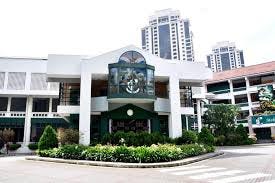
“Home is where the heart is” — that’s a line that I’ve believed ever since five-year-old me heard it in a song from a long-forgotten cartoon. When we pack up and leave a familiar place for good, those who inhabited the space leave with us, taking most of its meaning with them to wherever they settle next.
Yet, we know something is irretrievably lost when the edifice comes down — some essence in the architecture itself, independent of its people, or the concept of it.
I think we do miss the shape of the physical space, into which memory slots, like a key into a lock.
It’s in tribute of that longing that I’m writing this letter.
I used to scorn maudlin nostalgia. Revisiting old places was an ordeal: I was afraid to see that everything had changed without me, to find the place unrecognisable, to discover that the key no longer fit the lock.
Mourning the loss of a physical place, even though the school remains intact on every other level, is exactly that sort of foolish nostalgia I found embarrassing. The school song will soon be sung somewhere else, under the same flags. My ex-schoolmates are still around and easily-reached. Even that board of house cup winners will be hung up on a new wall in a new hall, records of a persistent memory that affirm the school’s singular, undivided identity.
But I’m starting to understand nostalgia, out here six thousand kilometres from everything I took for granted. When I last came home to Singapore, a new 30-storey building had sprung up in our neighbourhood. Every sodium streetlamp had been replaced with LEDs. The next-door apartments had been broken down, a field of rubble and exposed steel frames.
Nothing stays in Singapore. New malls and skyscrapers will sprout out, mushrooms on the corpses of older structures. Capitalism marches forward and it doesn’t care about what it unmakes.
Remembering what’s been unmade is a Singaporean brand of nostalgia. Longing for a place that no longer physically exists, that’s as Singaporean of an emotion as they come.
Reality check. My time at RGS wasn’t all smooth sailing. When I recall RGS, I see mostly storms. It was an overwhelming four years, through which I stumbled without knowing where I was headed. It turns out I was autistic without knowing it, weighed down by self-sabotaging tendencies, and I struggled with being hated without understanding why, and with hating myself so much I hurt myself (in punishment?), and with spats with teachers that often ended in punishments and admonishments that hardly felt real. It was all a part of it, growing up and realising hopelessness does exist.
But I remember the other things I dared to do, too, before the mortal anxiety and lasting consequences came. I wrote letters to crushes and folded them, corner to midline, corner to midline, slotting the corners into flaps. I stayed till the classroom was deserted so I could add paragraphs to my MapleStory fanfic epic without my parents’ knowledge. Sometimes, my friends and I collaboratively recited the periodic table during amphitheatre gatherings, naming successive elements until we reached roentgenium, the heaviest to have been synthesised back in 2010. Every afternoon, I’d detour to Block J to find my best friend. Sometimes we would head home via 190; sometimes we would conduct illegal — or shall I say legal — activities in the form of litigative VBA games on the school computers. I’d use the male bathroom on the regular, because I didn’t see the problem. Was that a sign?
It’s a palette of unplaceable colours, sounds and scents, each of which could set a thousand memories bursting into bloom in my mind. Good ones and bad ones. Falling asleep in the middle of Biology and waking up to an empty classroom, the lights all out. The drone of the counsellor as she proposed “holding my breath and counting to ten”, while I suffocated in her office’s perfume. Bawling in a bathroom stall, only to be tossed a note under the door from a stranger, folded into a paper airplane, with the message “everything will be okay” and a smiley face scrawled on it in red.
Event, place. Event, place. That’s how we tell stories. That’s how we situate memories. This happened in the east bathroom stall on the third floor outside my classroom, with the pink seats. That happened in the staff room on the second floor, and there was a little bell on the door that jingled when it was opened.
The place, the school, is an annotated map of remembrances. The place, the school, stood unshakeable, all our memories pinned to its walls. And I know I will find them there, if I just visited again. A stirring in a corner. A vision of an old day.
But the gates will be permanently shut by the time I come home.
When the lock is gone, the key is just a key, its shape remembering something that cannot be reverse-engineered.
Many of my friends, and many of my teachers, had the fortune of going back last week. They would have found great joy in the chance to embrace friends and teachers among its pillars and deep green walls. Some of the photos I saw on Facebook were recreations of scenes from a decade ago: efforts at connecting memory with place before the place disappeared.
I’m so happy that they got to give those halls and gardens, those rooms and foyers, the send-off they deserve, before they are disassembled once again into fragments of stone and earth.
That for a day, almost a century of living history was gathered beneath those tents, RGS not a building, but a living, breathing, growing, morphing legacy, momentarily tangible. A shifting sea of relationships and connections, too fluid to be held in one place, in one city.
But me? I’d have liked to sneak into a classroom in the slanting 5pm sun, all the lights off. I would boot up the computer surreptitiously, as if someone might chase me off if I were found.
I’d slot my thumbdrive in and open a novel-in-progress that I completed five years ago, resuming the adventures of a band of rebels questing against their tyrant king.
I’d gradually become aware of the musty scent of the swivel chair, the layer of dust on the screen. Decades-old dust in a decades-old room that will someday cease to exist — right now, its demolition date has not yet been logged, has not yet been dreamt up.
Maybe I was just crying in a bathroom stall yesterday. And maybe by tomorrow I’d have forgotten this. Today, I’d be a person again—alone in a space that was ours.
Leave a Reply